Jun 18, 2025
BY: ET Online8 Indian monuments that harvested rainwater
Rani ki Vav, Gujarat
A UNESCO World Heritage Site, this intricately carved stepwell in Patan dates back to the 11th century. Designed as an inverted temple, it stored rainwater and served as a cool retreat during summers. Its deep structure ensured long-term water availability in the arid region.
Image Source: iStock
Agrasen ki Baoli, Delhi
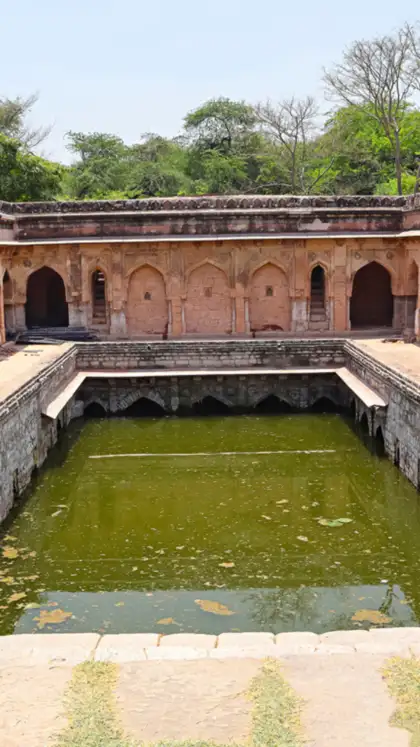
This 60-meter-long and 15-meter-wide stepwell is hidden in the heart of Delhi. Believed to be built during the Mahabharata era and rebuilt in the 14th century, the baoli collected and conserved rainwater, supporting nearby communities for centuries.
Image Source: iStock
Adalaj Stepwell, Gujarat
Located near Ahmedabad, this five-story stepwell was built in 1499. Apart from storing water, it served as a social and spiritual hub. The stepwell’s architecture maximised water retention and minimised evaporation, making it ideal for Gujarat's semi-arid climate.
Image Source: iStock
Panna Meena ka Kund, Rajasthan
Situated in Amer near Jaipur, this 16th-century stepwell is admired for its geometric stairways and symmetrical design. Built to collect monsoon water, it showcases the Rajputana style of water conservation through aesthetics and engineering.
Image Source: iStock
Chand Baori, Rajasthan
One of the deepest and largest stepwells in the world, Chand Baori in Abhaneri village, was built in the 9th century. With over 3,500 narrow steps across 13 stories, it was a water reservoir and a gathering spot in the Thar desert region.
Image Source: iStock
Hampi Pushkaranis, Karnataka
Scattered across the UNESCO site of Hampi are sacred step tanks called pushkaranis. These were linked to temples and used for ritual bathing as well as rainwater collection. Ingenious pipelines and aqueducts connected them to the Tungabhadra River and underground reservoirs.
Image Source: iStock
Surang Bawadi, Karnataka
Part of the Bijapur water system, Surang Bawadi was constructed in the 16th century under Adil Shahi rule. It functioned as a water distribution point, using an underground tunnel to supply water from the Torvi aquifer to the city — a feat of hydraulic engineering.
Image Source: iStock
Jantar Mantar Water Channels, Jaipur
While known for astronomy, Jantar Mantar in Jaipur also had water collection systems integrated into its design. Rainwater channels directed runoff into underground storage, highlighting how science and sustainability coexisted even in observatories.
Image Source: iStock
Thanks For Reading!